


Learn to Skydive Solo with Skydive GB
Accelerated Freefall, AFF
Skydive GB now offers Accelerated Freefall training, usually known as AFF, as an additional route into solo skydiving.
AFF sits alongside our established Static Line courses. Both routes can take you towards becoming a qualified skydiver, but they suit different people, different budgets and different ways of learning.
Static Line is a proven, progressive route into the sport, with students building experience step by step from lower-altitude jumps. If you are interested in learning by Static Line, please see our Static Line course page.
This page is about AFF, how it works, what is included and what to expect from the course.
What is AFF?
AFF stands for Accelerated Freefall.
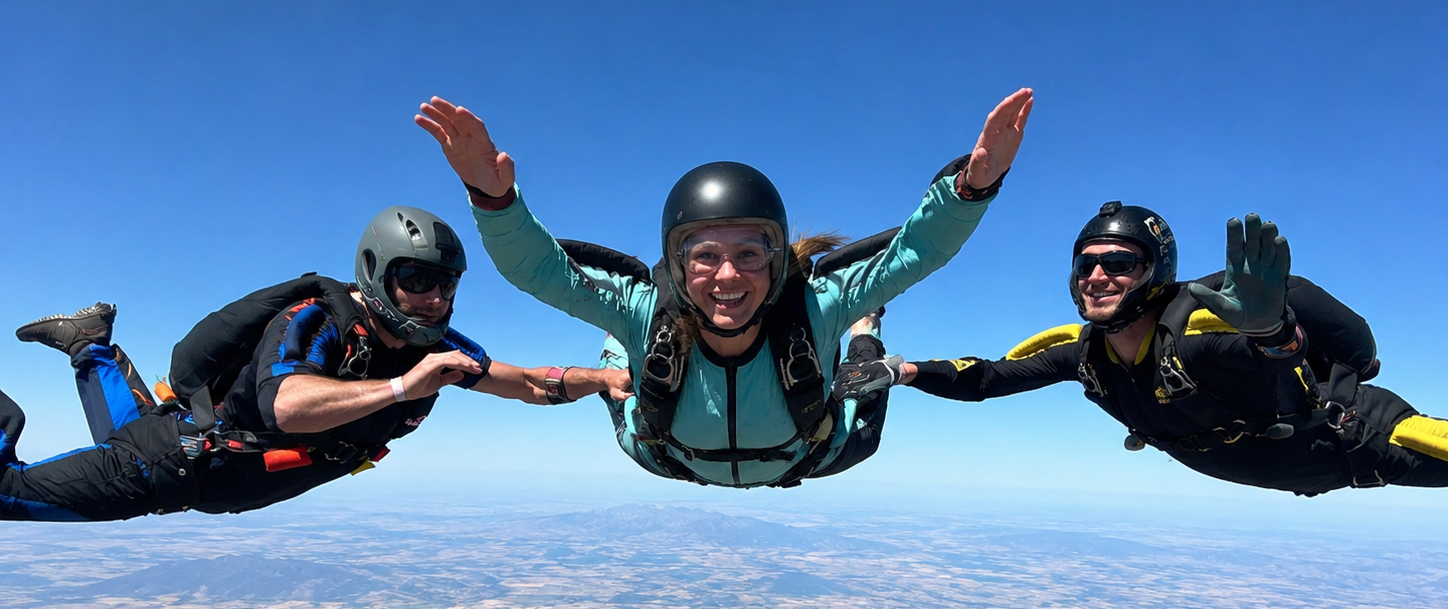
It is a structured training course for people who want to learn to skydive solo. Your first AFF jump is made from full skydiving altitude with two instructors alongside you in freefall. You are not attached to them, but they are there to coach, support and assist if required.
Before your first jump you complete ground school, where you learn the essential skills needed to make your first solo freefall safely. This includes aircraft procedures, body position, altitude awareness, parachute deployment, canopy control, landing patterns and emergency procedures.
As you progress through the AFF levels, you build the skills needed to skydive with less direct support. Early levels focus on stability, awareness and safe deployment. Later levels introduce turns, movement, solo exits and more independence.
The aim is to develop you into a safe, capable student skydiver ready for the next stage of progression.
Why choose AFF?
AFF may be right for you if you want:
- Full freefall from your first jump
- Close instructor support in the air
- A structured level-by-level training programme
- A concentrated route into solo skydiving
- A path towards further progression in the sport
AFF is exciting, but it is not a shortcut. You still need to learn the same core skills, understand your equipment, make safe decisions and progress at the right pace.
How the AFF course works
Ground school
Your course begins with ground training. This is where we teach you the knowledge and practical skills needed before you make your first jump.
You will cover:
- Skydiving equipment and how it works
- Aircraft procedures
- Exiting the aircraft
- Freefall body position
- Altitude awareness
- Parachute deployment
- Canopy control
- Landing patterns
- Radio guidance
- Emergency procedures
- What to expect on your first jump
Ground school is an important part of the course. We do not rush it. You need to understand what you are doing and be ready before moving on to the aircraft.
AFF Level 1
Your first AFF jump is made with two instructors.
You will exit the aircraft together, fly in freefall, complete planned practice touches, check your altitude and deploy your own parachute. Once under canopy, you will fly back to the landing area with radio guidance from the ground.
This is the big one. Your first solo freefall.
Levels 2 and 3
You continue jumping with two instructors.
These levels build on your first jump and focus on improving body position, heading control, altitude awareness and deployment. By the end of Level 3, the aim is for you to show enough stability and control for the instructors to release you in freefall.
Levels 4 to 7
From this stage, you normally jump with one instructor.
You will start learning more advanced freefall skills, including controlled turns, recovery from instability, solo exits and tracking. Each level has specific objectives, and you move on once those objectives have been met.
Level 8
Level 8 is usually a lower-altitude jump, often called a hop and pop, where the focus is on a safe exit and prompt parachute deployment.
Once you have completed the AFF levels, you move into consolidation jumps, where you continue practising and developing your skills as you work towards your A Licence.
After AFF
Completing AFF is not the end of the journey. It is the start of becoming a skydiver.
After completing your AFF levels, you will continue with consolidation jumps and further training. These jumps help you build confidence, improve your flying, practise canopy control and prepare for independent skydiving.
The aim is to progress towards your British Skydiving A Licence. Once qualified, you can continue developing within the sport, including formation skydiving, canopy training and other skydiving disciplines.
Skydive GB AFF Course
Our planned AFF course includes:
- Ground school training
- AFF Levels 1 to 8
- Skydive GB membership
- British Skydiving Solo Student Membership
- Instructor briefings and debriefings
- Structured progression through the AFF programme
Course price
The full course price is planned at:
£1,499
| Training stage | Cost |
|---|---|
| Ground school, AFF Level 1 and memberships | £299 |
| AFF Level 2 | £240 |
| AFF Level 3 | £240 |
| AFF Level 4 | £160 |
| AFF Level 5 | £160 |
| AFF Level 6 | £160 |
| AFF Level 7 | £160 |
| AFF Level 8 | £80 |
| Total | £1,499 |
A deposit of £149 secures your place.
The remaining balance is paid as you progress through the course.
Course dates
Our first Skydive GB AFF course is planned around the August open week.
Ground training is planned for Friday 7 August 2026.
The main AFF jumping window is planned from Saturday 8 August to Thursday 13 August 2026.
The UK and Open Accuracy Nationals then run from Friday 14 August to Sunday 16 August, so the drop zone will be busy over that weekend. There may be scope for some student jumping, but this can only be confirmed at the time depending on weather, aircraft, instructors and competition operations.
After the open week, Skydive GB returns to normal weekend operations. AFF instructors will manage availability, weather calls and suitable follow-up dates for students continuing their progression.
How long does AFF take?
AFF can be completed quickly if the weather is kind and you are able to be at the drop zone for several days.
Skydiving is weather dependent, so no course can guarantee that every jump will be completed on a fixed day. Wind, cloud, visibility, aircraft operations and instructor availability all affect what can be done.
Some students progress quickly. Others need more time, extra training or a repeat level. That is normal. The aim is not just to tick boxes. The aim is to make you safe, confident and ready for the next stage.
Is AFF right for me?
AFF may be right for you if:
- You want to learn to skydive solo
- You want more than a tandem experience
- You are comfortable with proper training and responsibility
- You can commit time to the course and follow-up jumps
- You are happy to learn at a structured pace
- You want to work towards becoming a qualified skydiver
AFF is exciting, but it is also demanding. You will be trained, coached and supported, but you are actively learning to skydive from the start.
Requirements
To take part in AFF you must meet the current British Skydiving student requirements.
You will need to:
- Be at least 16 years old
- Meet the required medical declaration or doctor’s certificate requirements
- Be physically able to complete the training and skydive safely
- Join Skydive GB as a member
- Hold the required British Skydiving student membership
- Attend ground school before your first jump
Students aged under 18 will need the correct parental or guardian consent.
Medical requirements depend on your personal circumstances. We will guide you through the correct forms before the course.
What to bring
For ground school and jumping days, please bring:
- Comfortable clothing
- Suitable trainers
- Warm layers
- Food and drink for the day
- Any required medical forms
- Photo ID if requested
- Patience, as skydiving is weather dependent
All specialist skydiving equipment for the course will be provided unless otherwise agreed.
Frequently asked questions
Do I need to have done a tandem first?
No. A tandem can be a good introduction to skydiving, but it is not normally required before starting AFF.
Am I attached to an instructor?
No. On AFF you wear your own parachute system. Instructors jump with you and assist you in freefall, but you are learning to skydive yourself.
Will I deploy my own parachute?
Yes. You are trained to deploy your own parachute from your first AFF jump.
What happens if I do not pass a level?
That can happen. AFF is based on demonstrating the required skills. If a level needs to be repeated, your instructor will explain what needs improving and you will be briefed before jumping again.
Is the course weather dependent?
Yes. All skydiving is weather dependent. Student limits can be more restrictive than experienced jumper limits, especially for wind and cloud.
What happens after Level 8?
You continue with consolidation jumps and further training as you work towards your British Skydiving A Licence.
Can I spread the course over weekends?
The initial course is best completed over a concentrated period where possible, but follow-up jumps can be arranged around instructor availability, weather and normal Skydive GB operations.
Is AFF scary?
It is normal to be nervous. The course is designed to train and prepare you properly before your first jump. Most students find that the nerves are part of the experience, and the sense of achievement afterwards is huge.
Ready to start?
If you want to learn to skydive solo, AFF could be the right next step.
Places are limited so that we can manage training, instructor availability and progression properly.